
How to Clean and Condition Leather Car Seats
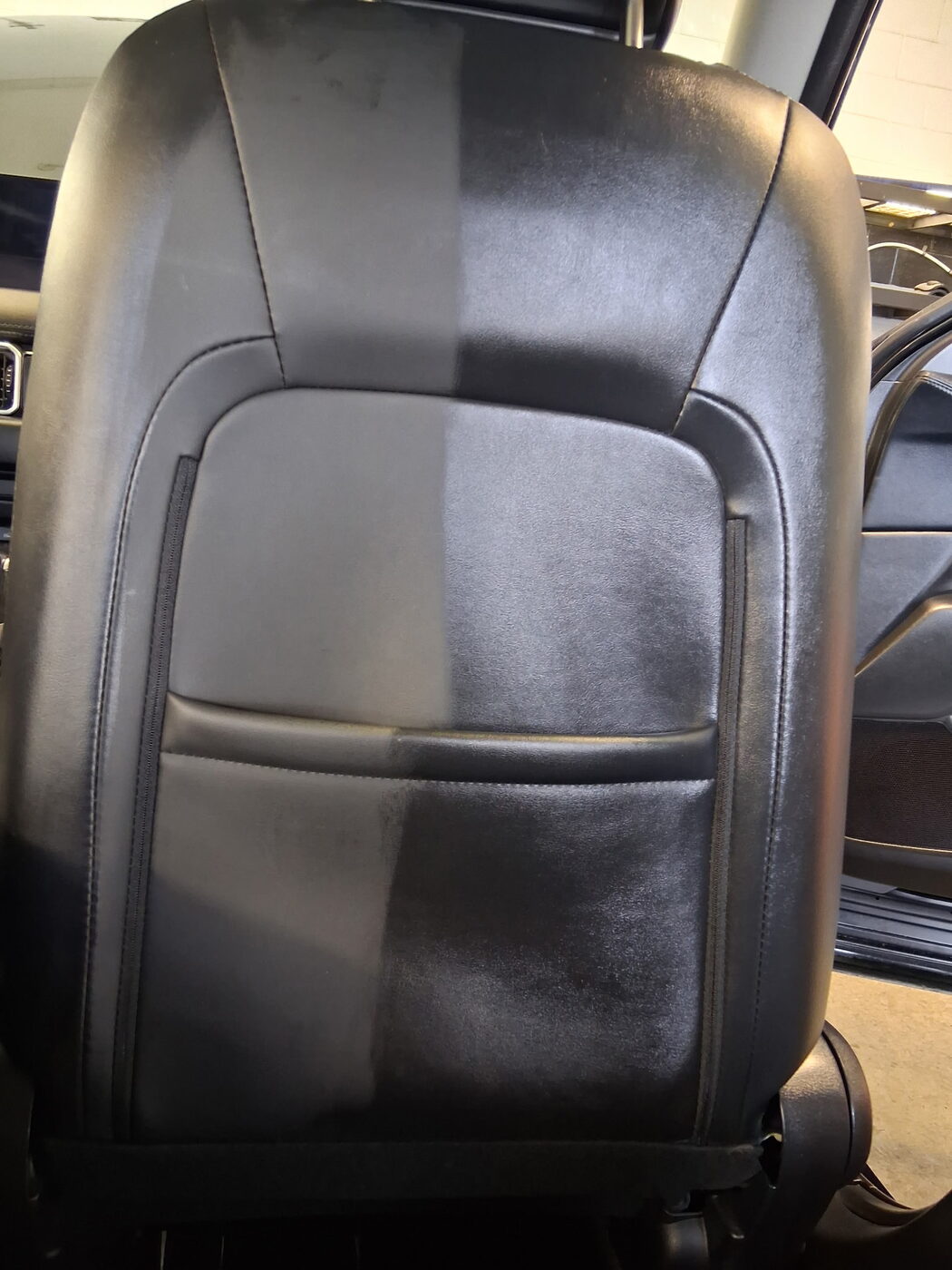
Leather seats are one of the best parts of a nice vehicle — right up until they dry out, fade, and start cracking. Then they're the most expensive-looking thing in the car to fix.
The good news: leather is easy to keep if you stay on top of it. Most people don't, and by the time cracks show, you're past what a wipe-down can fix. Here's how to clean and condition it properly, and where DIY runs out of road.
Why Leather Needs Special Care
Leather isn't cloth. You can't just soak it, scrub it, and vacuum it dry. It's a skin — and like skin, it dries out, absorbs oils and dirt, and cracks when it's neglected.
Here's what leather is fighting in a Fraser Valley vehicle:
- Sun. UV through the windows dries leather and fades the colour.
- Body oils and sweat. They soak in over time, darkening high-contact spots like the bolsters and seat base.
- Dirt and grit. Ground into the grain, it acts like sandpaper every time you sit down.
- Dryness. Without conditioning, leather stiffens and starts to crack — and cracks don't heal.
Clean it wrong and you can do damage — soaking it, scrubbing too hard, or using a harsh household cleaner strips the finish and dries it out faster.
How to Clean Leather Seats at Home
You can absolutely handle routine cleaning yourself. Go gentle and go in order.
- Vacuum first. Get the loose grit and crumbs out of the seams and seat base so you're not grinding them in when you wipe.
- Use a proper leather cleaner. Not dish soap, not all-purpose spray, not a magic-eraser type pad — those strip and dry the finish. A dedicated automotive leather cleaner is cheap and made for the job.
- Work a small area at a time. Spray the cloth, not the seat, and wipe gently.
- Agitate lightly with a soft brush for grimy, textured, or perforated leather — soft being the key word. Let the cleaner do the work, not your muscle.
- Wipe it dry with a clean microfibre cloth. Never leave it soaking wet, and never let water pool in perforations.
That handles the dirt. But cleaning is only half the job — and it's the half most people stop at.
How to Condition Leather (The Step People Skip)
Cleaning strips oils out of the leather. Conditioning puts them back. Skip it and you're slowly drying your seats out every time you clean them.
- Wait until the leather is clean and dry before conditioning.
- Apply conditioner to a cloth, not straight onto the seat, and work it in with light, even coverage.
- Don't drown it. A thin, even coat beats a thick greasy one. Too much just sits on the surface and stays slick.
- Let it soak in, then buff off the excess with a clean cloth so the seats aren't slippery.
- Do it regularly — a few times a year is plenty for most drivers, more if the vehicle bakes in the sun.
Conditioned leather stays soft, keeps its colour, and resists cracking. It's the single habit that separates seats that age well from seats that fall apart.
Where DIY Hits Its Limit
Home care handles maintenance. It doesn't handle everything.
- Deeply ground-in grime in the grain and perforations needs proper agitation and extraction to lift out without soaking the leather.
- Heavily soiled or neglected seats that haven't been touched in years take real work and the right products to bring back safely.
- Perforated leather (the kind with tiny holes) is easy to damage or clog — too much product and it sits in the holes.
- You're not sure what you're working with. Some "leather" is coated, some real, some vinyl pretending to be leather. The wrong product on the wrong surface causes damage.
Cracked or torn leather is a repair job, not a cleaning one — and that's worth being straight about. But leather that's just dried out, dirty, or dull is exactly what a proper clean and condition brings back.
Let a Pro Handle It
That's where our leather conditioning add-on comes in. It's quote-based because leather varies — a lightly-worn set of seats is a different job than a decade of baked-in grime.
Here's what pro-level leather care gets you:
- The right cleaner and conditioner matched to your actual leather type
- Proper agitation and extraction of ground-in dirt without over-soaking
- Even conditioning that soaks in instead of sitting greasy on top
- The high-wear spots — bolsters, seat base, arm rests — given the attention they need
Leather conditioning stacks onto any package. Most people add it to an Interior Detail ($325) or a Complete Detail (from $425) so the seats get brought back at the same time as the rest of the cabin.
The Bottom Line
Cleaning leather is easy — use a proper leather cleaner, go gentle, and never soak it. The step that actually saves your seats is conditioning, and it's the one most people skip. Do both a few times a year and your leather stays soft and crack-free. When the grime's ground in deep or the seats have been neglected for years, that's when it's worth handing over.
Leather looking tired, dry, or grimy? Bring it to us. Book leather conditioning at dirtydetails.ca/book or call (604) 845-4060 for a quote. We love dirty — even the seats you gave up on.
FAQ
Q: Can I use household cleaners on leather seats? A: Don't. Dish soap, all-purpose sprays, and abrasive pads strip the finish and dry the leather out, which speeds up cracking. Use a cleaner made for automotive leather, or let a pro handle it.
Q: How often should I condition my leather seats? A: A few times a year is enough for most drivers. If your vehicle sits in the sun a lot or gets heavy daily use, more often. The goal is to never let the leather fully dry out.
Q: Can you fix cracked leather seats? A: Cracked or torn leather is a repair job, not a cleaning one — so we'll be straight with you about what's fixable. Leather that's dried out, dirty, or dull, though, cleans and conditions back to life really well.
Q: How much does leather conditioning cost? A: It's a quote-based add-on because leather condition varies so much. Lightly-worn seats are a quick job; years of neglect is real work. We give you an honest number after we see it, and it stacks onto any detail package.
Interior, exterior or the full inside-and-out Complete Detail — book online in two minutes.