
Back From the Forest Service Roads? Clean It Before Winter
Everybody in this town has a version of the same truck. It does the week in Chilliwack and then, come September and October, it does Chilliwack Lake Road, the Chipmunk Creek turnoffs, the Columbia Valley climbs, or whatever forest service road the hunting or the firewood or the fishing is on that weekend.
You come back down, hose off the worst of the outside, and put it in the driveway.
The outside was never the problem.
What a Weekend on the FSRs Puts Inside the Truck
Backroad dirt around here isn't one thing. A single Saturday can leave you with all of it:
- Glacial river silt off the Chilliwack and Vedder systems — so fine it acts like flour until it's wet, then it acts like cement
- Logging-road dust, which is crushed rock and genuinely abrasive
- Wet clay off the greasy sections, which dries in the carpet like a shell
- Pine needles, fir sap and bark tracked in on boots and gear
- Whatever's in the bed, from firewood debris to a wet tarp to gear you'd rather not describe
- Water — from a creek crossing, from a downpour, from soaked gear thrown into the back seat
The silt is the one that actually hurts you. It's fine enough to get past every seal and into every seam, and it's hard enough to grind. It ends up in the vents, behind the seat backs, under the rear seat bottom, in the door card pockets, in the seat belt retractors, and packed along the carpet edges.
Why Fall Trips Are Worse Than Summer Trips
A summer run puts dry dust in your truck and the truck stays warm and dry. That's survivable.
A fall run in the valley puts the same dust in, and then hands it over to six months of rain, fog and cold. That's a different outcome entirely:
- Wet silt stops moving and starts packing. Once it's damp it bonds to the carpet backing instead of sitting on top of it.
- Organic matter starts breaking down. Needles, bark, mud with plant material in it — inert while dry, rotting as soon as it's wet in a cold cab.
- Nothing dries out. From October the cab basically never gets a proper dry cycle, so November's mud is still November's mud in February.
- Salt arrives on top. Once brine season starts, road salt clings to whatever's already on your panels, in your wells and in your box far better than it clings to clean steel.
So the truck that goes into winter dirty doesn't stay the same amount of dirty. It compounds.
What the Outside Takes
Backroads are hard on exterior surfaces in ways a wash doesn't address:
- Wheel wells and the frame pack solid with clay, which holds water against metal all winter
- Rock chips and abraded paint edges from the gravel spray
- Sap and pitch on horizontal panels from parking under conifers
- Bug and organic film baked on from the drive out
- A box floor with ground-in grit that scratches everything you put in it afterwards
Being straight with you about the paint: we clean and decontaminate, we don't correct. If a logging road put chips in your leading edges, that's a body shop conversation, not a detailing one. We won't polish, buff or fill it, and we'll tell you that up front rather than selling you something that doesn't fix it.
How We Strip a Backroad Truck
We're a drop-off shop on Yale Road and this is normal work for us — work truck and backroad rig detailing is most of what comes through here, not an exception.
On the inside, an Interior Detail at $325 means compressed air through the seams and vents first, then hot water extraction on the carpet and seats so the silt comes out rather than getting rearranged, then steam and detail work on every jamb, sill and console seam.
On the outside, the Exterior Detail at $250 means foam, hand wash, wheels, wells, tires and the jambs — the places where packed clay actually lives.
After a season of trips, the Complete Detail from $425 is the one that makes sense. It covers both, saves you $150 against booking them apart, and a truck that's been on the FSRs genuinely needs both ends done.
Two things worth knowing about how that goes. First, the interior gets done dry-first — compressed air and mechanical removal before a drop of water touches the silt, because wetting fine grit turns it into a paste that bonds instead of lifting. Second, the truck needs the day. We're a drop-off shop, not a lineup, and a backroad rig isn't a ninety-minute job if it's being done properly. You book a slot, you leave it with us, and we deliver it back to you when it's actually finished and actually dry.
Add-ons that come up constantly on these trucks:
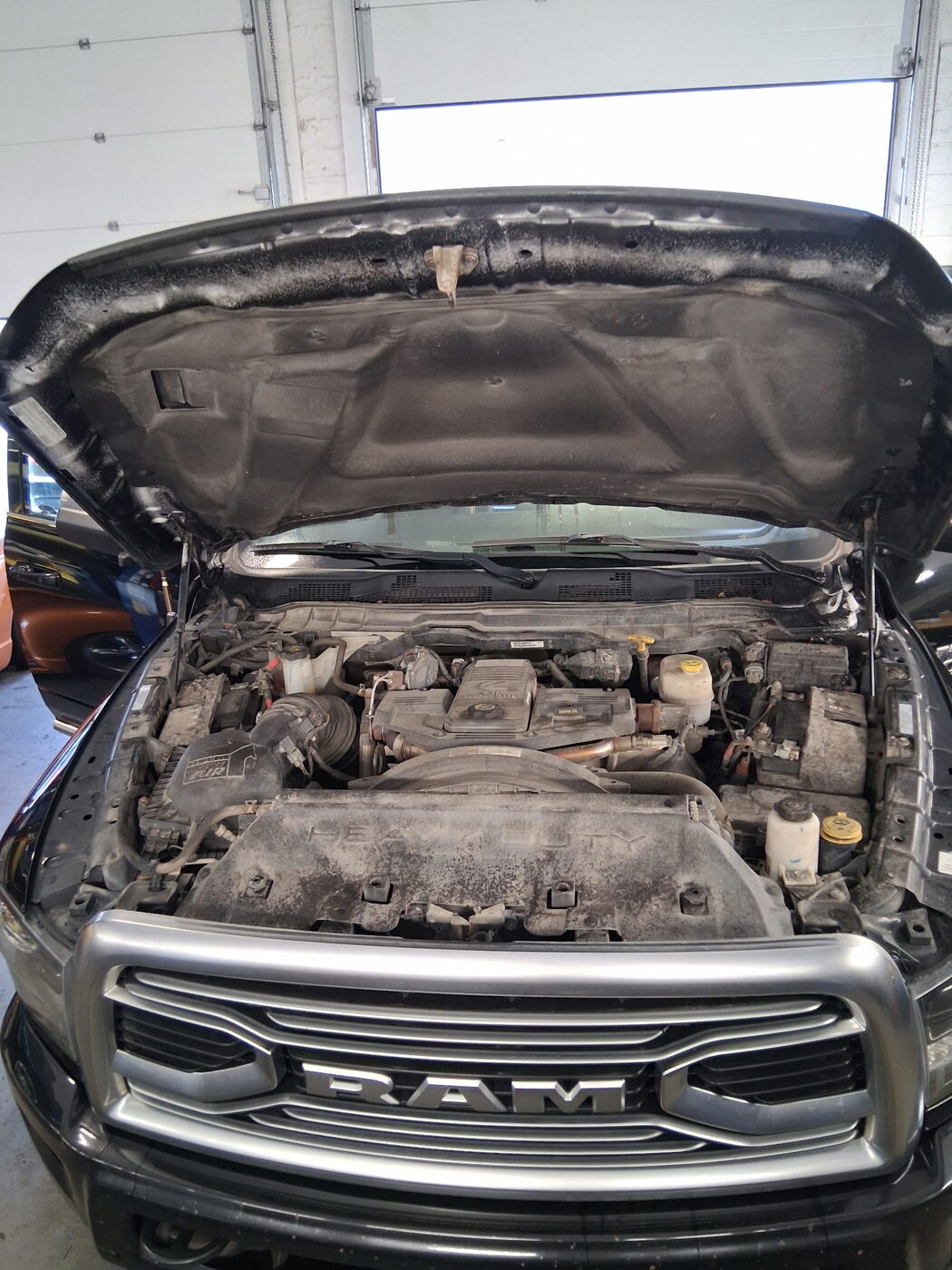
- Engine bay detail — $100 flat. Dust and clay in a bay hides a weep or a seep. Clean it and you can actually see a problem before it strands you somewhere with no cell service.
- Odour removal — quoted on sight. Wet gear, game, gas cans and a closed cab is a real combination.
- Seat extraction — quoted on sight, for the silt packed under the rails and beneath the rear bench.
- Headliner — $100 flat, for the dust that's ridden the heat up to the roof all season.
If your weekends run more toward Cultus Lake and the Columbia Valley, the sand and silt story is the same one — different road, same fine grit doing the same work on your carpet.
Get It In Before the Rain Locks It In
Here's the timing argument, plainly.
Right now, everything in your truck is dry. Dry silt and dry dust come out. Air moves them, extraction lifts them, and the job is a clean job.
Give it four weeks of valley rain and the same material is wet, bonded, and starting to break down. Give it until April and it's had salt layered onto it and a winter to set. That's not the same job anymore, and it's not the same cost or the same result.
The honest window is now to the end of October — after the season's last trips, before the weather turns it into something else. Everyone books in April when it's at its worst; the ones who book in October spend the winter driving a truck that isn't grinding itself down.
We're appointment-based, so the slot has to be booked rather than shown up for. Grab one at dirtydetails.ca/book or call (604) 845-4060, and bring it in exactly as it came off the mountain. We love dirty — that's the whole business.
Interior, exterior or the full inside-and-out Complete Detail — book online in two minutes.