
Storing a Vehicle for Winter? Clean It Before It Sits
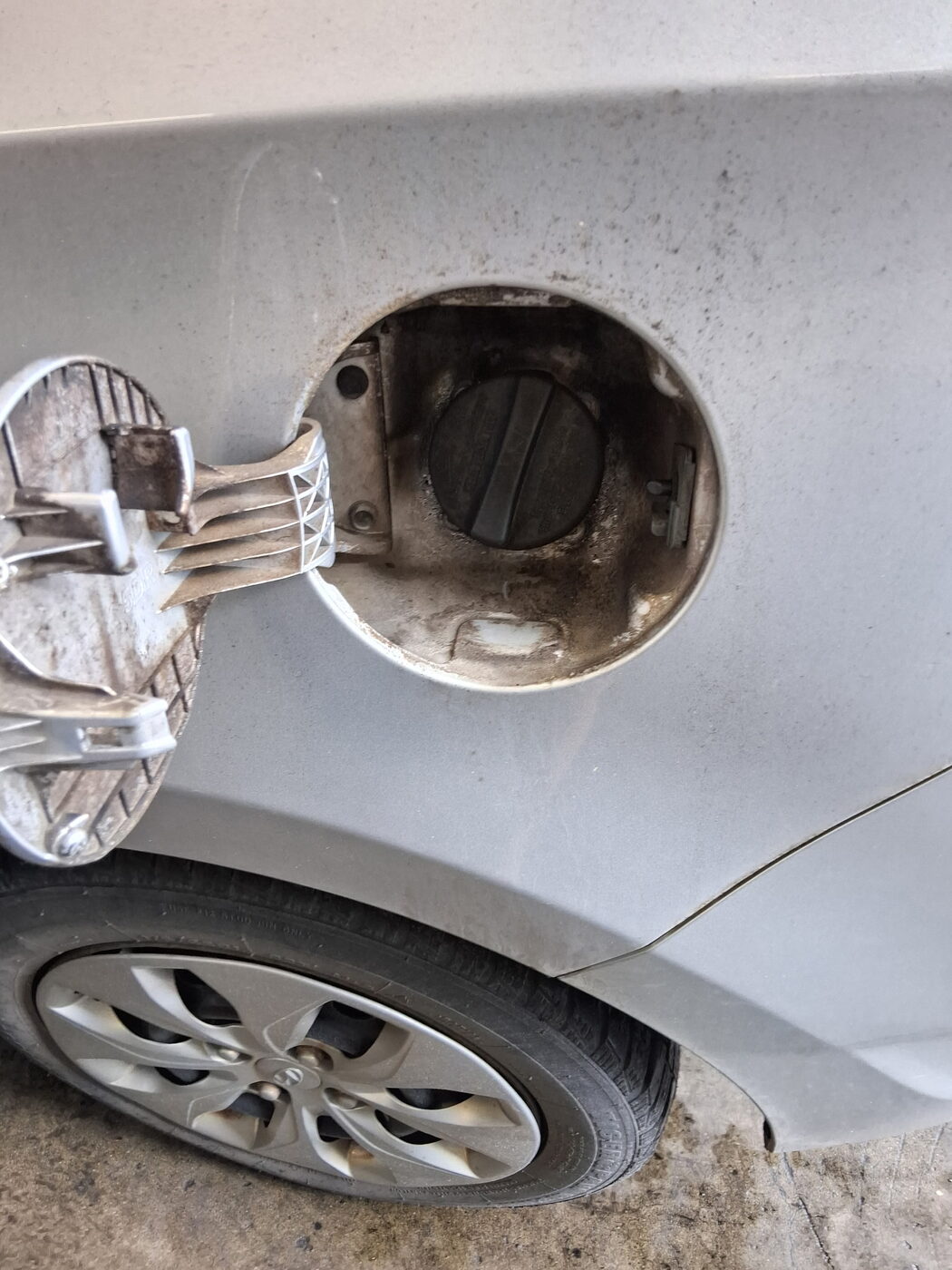
There's a certain kind of valley vehicle that works six months a year. The boat-hauling truck. The convertible. The quad trailer. The old project car under a tarp behind the shop in Yarrow, or in a barn out past Rosedale, or squeezed into a Sardis carport with the lawn mower.
Some time in the next month it gets parked, and most people park it exactly as it came off its last trip.
That's the mistake. Not a big dramatic one — a slow one, and you don't find out until spring.
Six Months Is Long Enough for Damage
A stored vehicle isn't in stasis. It's in a Fraser Valley winter, which means months of high humidity, no airflow, no heat cycling from being driven, and no sunlight.
Everything you leave inside it gets that whole season to work. Moisture doesn't evaporate out of a closed vehicle in a damp barn — it just moves around inside it, condensing on the glass overnight and going back into the fabric during the day. That's the cycle that turns a slightly musty car into a genuinely bad-smelling one between October and April.
Anything organic in there is in a warm damp box with no ventilation. It behaves accordingly.
The other thing nobody accounts for is that a stored vehicle doesn't get looked at. A daily driver tells you when something's wrong — you smell it on Monday morning, you see the stain when you're loading groceries. A vehicle under a tarp gives you no feedback at all for six months, so whatever starts in November has until April to finish.
What's Still in the Carpet From August
Think about where the vehicle actually went this summer.
If it towed a boat, there's Cultus Lake sand in the carpet — and sand comes back to the beach with lake water and organic matter in it, not clean out of a bag. If it went up an FSR, there's dried creek mud in the driver's footwell. If it hauled anything for the farm, there's hay chaff, feed dust and gravel in every seam.
Then the usual: a spilled coffee that dried and got forgotten, half a granola bar under the passenger seat, a wet towel in the back that somebody meant to grab.
That's the inventory you're sealing in. In April you open the door and get hit by six months of it at once.
Sap and Bug Remains Don't Pause
The outside has the same problem for different reasons.
A summer of parking under a maple or a big fir leaves tree sap on the paint. A summer of driving leaves bug remains on the front end. Bird droppings land wherever they land. All three are acidic or bonded, and all three keep working on the clear coat whether the vehicle is moving or not — a tarp over the top doesn't stop the chemistry, it just stops you seeing it.
Six months is a long time for something acidic to sit on paint. Clean it off in October and it's a cleaning job. Find it in April and it may have etched, which is a different problem and a different shop — we clean vehicles, we don't do paint correction, polishing or coatings, and we'll tell you plainly when something has gone past what washing can reach.
Mice Follow Crumbs
This is the valley-specific one, and anyone who's stored something in an outbuilding near a field already knows it.
Come the first cold snap, mice move indoors. A vehicle is an excellent house: enclosed, insulated, full of soft nesting material, and — if you parked it with food in it — stocked. They get in through the cabin air intake, up through the cowl, or through any gap the tarp doesn't cover.
You don't want to be the person who finds out in April. The clean-out afterward is genuinely unpleasant, and everything they got into is a smell problem on top of a mess problem.
The cheapest prevention is removing the reason:
- Every crumb, wrapper and food item out — including the glovebox and the door pockets.
- Floor mats out, cleaned, dried and put back only once dry.
- Carpets clean and, critically, dry before the doors close for the season.
- Nothing damp left inside — no towels, no wet gear bag, no jacket.
- Windows fully up, and the vehicle stored under cover on a hard, dry surface if you have the option.
Parking on bare dirt or grass in a barn is worth avoiding where you can. Ground moisture wicks up all winter, and a vehicle sitting over it gets a constant supply of damp from underneath that a concrete pad simply doesn't provide.
Book It on the Way Into Storage
The straightforward version: get it cleaned as part of parking it, not as part of waking it up.
For most stored vehicles that's Complete from $425 — inside and out in one booking, which saves $150 against booking the two separately. If the paint is the part that had the hard summer and the interior stayed clean, Exterior is $250 on its own. If it's the reverse — a work truck whose cab lived through harvest — Interior is $325, covering full vacuum, steam clean, shampoo, plastic restoration, windows, door jambs and air vents.
Odour removal and seat extraction stay quote-only, because what's needed depends entirely on what we find. Everything with a fixed number on it is published on the cost page.
Worth saying: we're not going to sell you a coating or a "storage sealant" as part of this, because we don't offer them. What we can do is hand the vehicle back clean and dry, which is the part that actually determines what April smells like.
The April Version of This Story
Two trucks parked in October, both after the same summer of lake trips and gravel roads.
The first one got backed into the barn on a Sunday with lake sand still in the carpet, a damp towel behind the seat and a coffee that had dried into the console weeks earlier. Doors shut. Tarp on.
The second one came to us the week before it went away. Sand out of the carpet, bugs and sap off the paint, everything dry, nothing organic left inside.
In April the first one opened with that smell — sour, set into the foam, and now needing an odour quote on top of a full interior. Some of the sap on the hood had been sitting long enough that cleaning got it off and left a mark behind. The second one needed a rinse to knock the barn dust off, and it went straight back to the lake.
Same summer. Same barn. One decision apart, and the one that cost less was the one made in October.
If yours is getting parked in the next few weeks, book the slot before it does: dirtydetails.ca/book, or call (604) 845-4060. We're at 44344 B Yale Rd in Chilliwack, appointment-based, since 2020 — and we'd genuinely rather see it now than in the spring.
Interior, exterior or the full inside-and-out Complete Detail — book online in two minutes.