Get Your Farm Truck Cleaned Before Mud Season, Not After
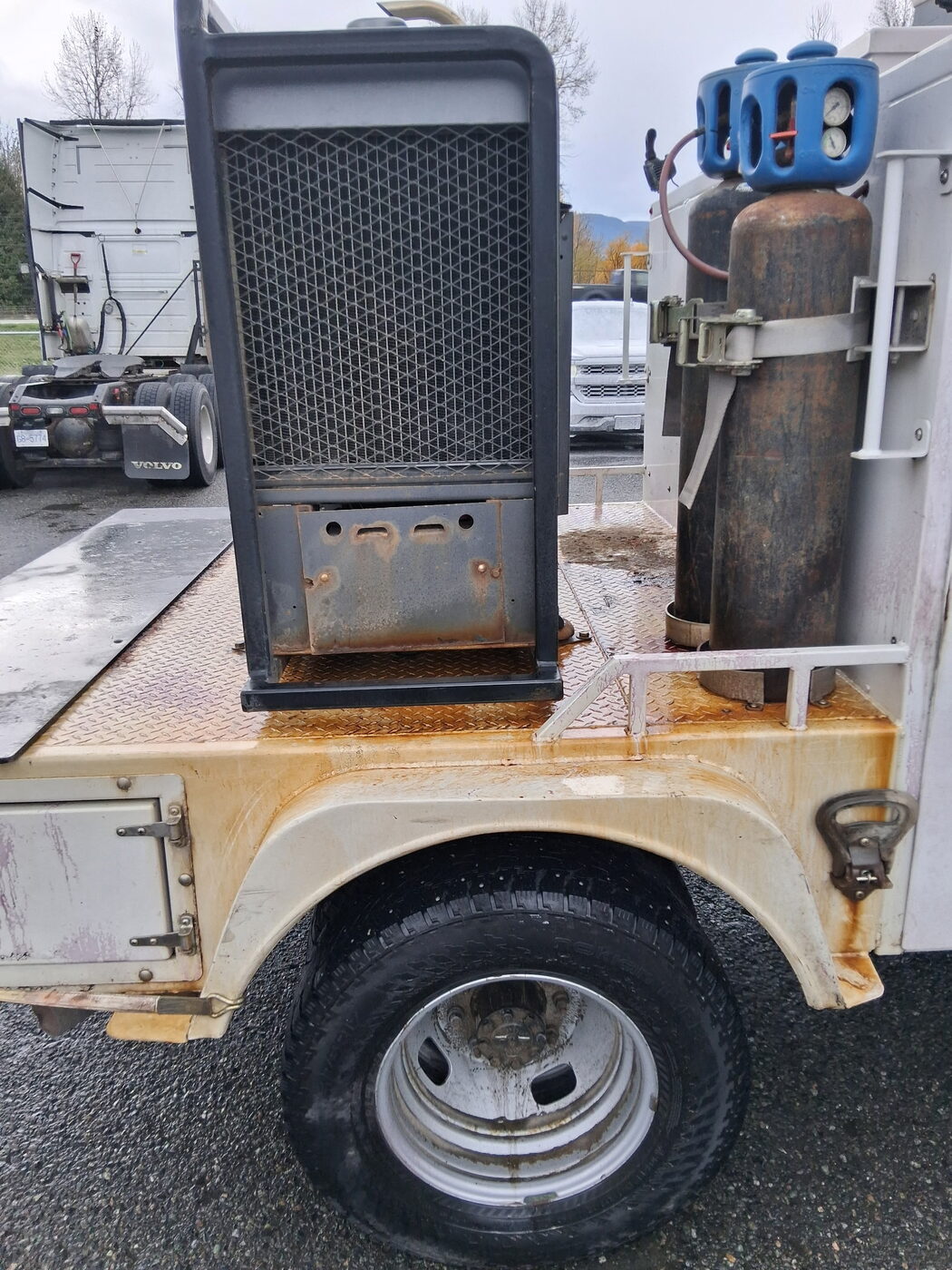
Late August in the valley. Fields are dry, the gravel roads are dust, and your truck is wearing a full summer of hay, feed dust, manure and grease.
In six weeks it'll rain and it won't stop until spring. Then all of that summer buildup becomes the base layer that mud packs onto.
Everybody books a detail in April, when the truck is at its worst. Booking now is the better play, and here's the actual reasoning.
Why Before Beats After
Layers are harder than dirt. Summer residue that's had winter mud pressed into it for six months isn't a wash job anymore. It's excavation. Strip the summer off now and what you're dealing with in April is one season of mud instead of two seasons fused together.
Organic matter rots when it gets wet. Feed, hay, manure, grass — that stuff is inert while it's dry and dusty. Add October rain and a closed cab and it starts breaking down. The smell you're stuck with all winter starts right now.
Salt sticks to dirt better than it sticks to clean. Once brine season starts, salt clings to whatever's already on the panels and in the wells and stays there.
Wet cabs don't dry out. From October to March your cab basically never fully dries. Anything that goes into the carpet in November is still in there in February. Starting from a clean, dry interior gives you a fighting chance.
You're less busy now. Come spring you'll want the truck working, not sitting at a shop.
What Summer Leaves in a Working Rig
We see the same list on every farm truck and work rig that comes through 44344 B Yale Rd:
- Feed and hay dust ground into every vent, seam, and the base of the windshield
- Manure dried into mats, pedals and the door sill
- Gravel dust in the carpet, which is abrasive and grinds the fibres down
- Grease and oil transferred off gloves onto the wheel, shifter and door handles
- Chemical and fertilizer residue on the exterior and in the box
- Dog hair from the one riding shotgun
- A cab that smells like all of it at once
None of that comes off with a hose at the yard.
What We Do to a Working Truck
We've been doing this since 2020 and work rigs are a big chunk of what comes through the door. Our work truck detailing and farm vehicle detailing exist because valley trucks are their own category.
Depending on what you book — Interior $325, Exterior $250, or Complete from $425 with $150 saved over booking both — the work covers:
- Deep interior extraction — dust, grease and organic matter pulled out of the carpet and seats instead of pushed around
- Degreasing the contact points — wheel, shifter, handles, seat bolsters, the places your gloves live
- Full exterior wash and decontamination, stripping the summer film off the paint
- Wheels, tires and wells, where the packed stuff lives
- Interior glass, so you can see out of it after a dusty month
The Add-Ons Work Rigs Actually Need
Base packages don't cover the specialty problems, and working trucks usually have at least one:
- Odour removal — the manure, diesel and wet-dog blend that's soaked into the fabric (quote on sight)
- Pet hair removal — for the farm dog (quote on sight, and worth reading our pet hair post)
- Seat extraction — pulling seats to reach what's packed underneath (quote on sight)
- Leather conditioning — for seats that have been baked and worked (quote on sight)
- Engine bay cleaning — $100 — flat rate, and on a working truck it's the easiest hundred you'll spend. A degreased bay means you can actually spot a leak before it becomes a breakdown.
- Headliner — $100 — for the roof liner that's grey from dust and hands
The quoted items are quoted because a two-year-old fleet truck and a decade-old farm beater are genuinely different jobs, and we're not going to pretend otherwise with a flat number.
Then Get Ahead of Salt
Once you're clean going into the fall, the winter play is different — that's a salt problem, not a mud problem, and it's a corrosion issue rather than a cosmetic one. We've written that up separately in remove winter salt stains from your truck.
Short version: a clean truck going into brine season handles it better than a dirty one, and salt removal is a quote-on-sight add-on when it comes to that.
Running More Than One?
If you've got a couple of rigs, a crew's worth, or a mix of trucks and farm equipment, call us. We're appointment-based, not a drive-through, which means we can plan around your schedule instead of leaving you in a lineup while a truck you need is off the job.
And when it's done, we deliver it back to you. We don't come out to your yard — no mobile service, no on-site work — but you're not stuck arranging a ride either.
The Bottom Line
Cleaning a farm truck after mud season is fixing a problem. Cleaning it before is preventing one. Summer's dust, feed and manure is the base layer everything else sticks to, and organic matter that gets wet in October is the smell you live with until April.
Bring us the one you're almost embarrassed to bring in — that's the one we want. Book at dirtydetails.ca/book or call (604) 845-4060. We love dirty. The dirtier the better.
FAQ
Q: My truck is genuinely disgusting. Manure, the works. A: That's the job. We've been cleaning valley work rigs since 2020 and the filthy ones are the reason the shop exists.
Q: Do you come out to the farm? A: No. We're a shop at 44344 B Yale Rd in Chilliwack — no mobile or on-site detailing. We do deliver the finished vehicle back to you, though.
Q: Is the engine bay worth $100 on a work truck? A: On a working truck, yes. A clean bay makes leaks and worn components visible, which matters more on a rig you depend on than on a commuter car.
Q: Why can't you just quote the odour removal over the phone? A: Because "it smells" covers everything from a surface odour to something that's soaked into the padding and headliner. We quote it after we've seen and smelled the actual vehicle, so the number is real.
Interior, exterior or the full inside-and-out Complete Detail — book online in two minutes.